
Platform
Symbiotic Core
Shared collateral infrastructure for financial applications.
Symbiotic Core coordinates how collateral is committed, allocated, and enforced across onchain finance. Vaults define the rules, curators manage capital strategies, and applications draw on shared collateral.
Symbiotic Core coordinates how collateral is committed, allocated, and enforced across onchain finance. Vaults define the rules, curators manage capital strategies, and applications draw on shared collateral.
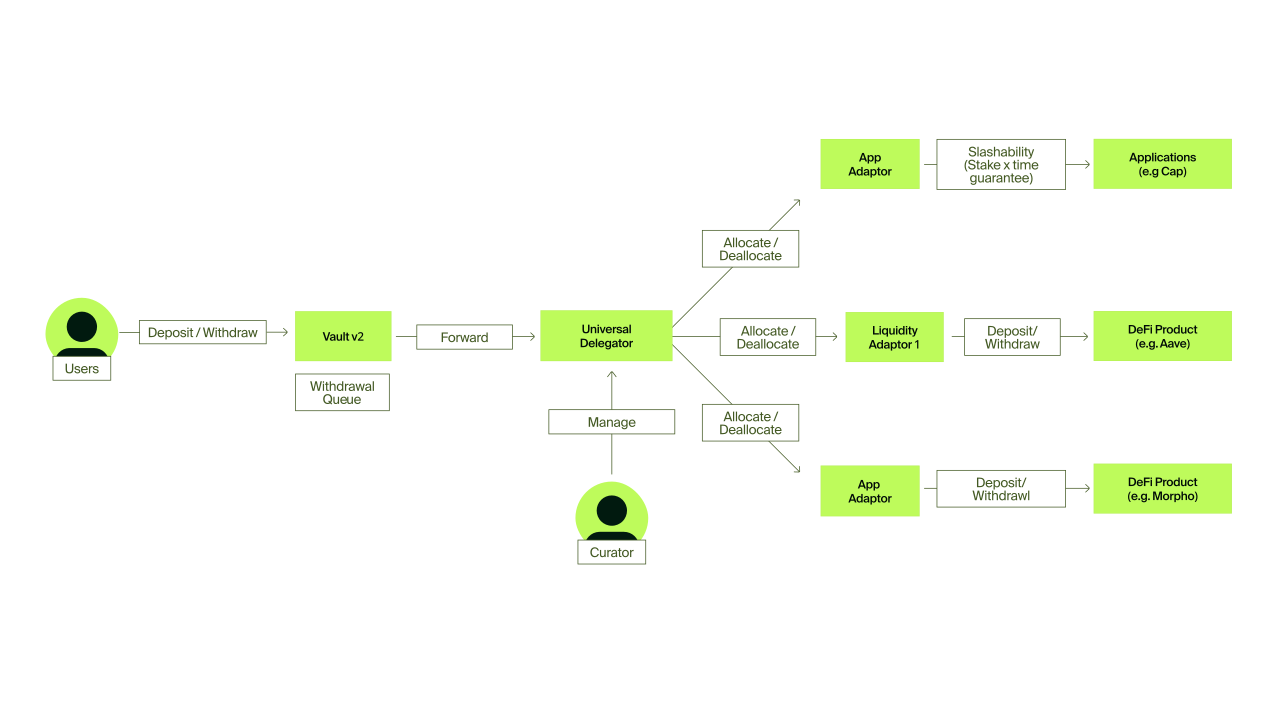
Capital Providers
Access defined, yield-generating strategies. Put a single deposit to work across multiple avenues with pre-determined rules for how the capital is allocated, recalled, and rewarded.
Vault Curators
Design flexible allocation strategies with purpose, duration, and loss terms defined upfront. Capital can dynamically move across deployment paths as conditions change, giving curators greater control.
Financial Applications
Access shared collateral to power new use cases without creating isolated capital pools. Symbiotic lets applications draw on committed capital at a lower effective cost.
Capital Providers
Access defined, yield-generating strategies. Put a single deposit to work across multiple avenues with pre-determined rules for how the capital is allocated, recalled, and rewarded.
Vault Curators
Design flexible allocation strategies with purpose, duration, and loss terms defined upfront. Capital can dynamically move across deployment paths as conditions change, giving curators greater control.
Financial Applications
Access shared collateral to power new use cases without creating isolated capital pools. Symbiotic lets applications draw on committed capital at a lower effective cost.
Core Primitives
The components that make shared collateral work.
Programmable collateral containers for depositing assets, defining risk parameters, and powering strategies. The entry point for capital in Symbiotic
Allocation logic that routes vault capital across applications and strategies according to curator-defined rules.
Connectivity layers that let vaults deploy capital into external strategies through standardized integrations.
Core Primitives
The components that make shared collateral work.
Programmable collateral containers for depositing assets, defining risk parameters, and powering strategies. The entry point for capital in Symbiotic
Allocation logic that routes vault capital across applications and strategies according to curator-defined rules.
Connectivity layers that let vaults deploy capital into external strategies through standardized integrations.
Core Primitives
The components that make shared collateral work.
Programmable collateral containers for depositing assets, defining risk parameters, and powering strategies. The entry point for capital in Symbiotic
Allocation logic that routes vault capital across applications and strategies according to curator-defined rules.
Connectivity layers that let vaults deploy capital into external strategies through standardized integrations.
Core Primitives
The components that make shared collateral work.
Programmable collateral containers for depositing assets, defining risk parameters, and powering strategies. The entry point for capital in Symbiotic
Allocation logic that routes vault capital across applications and strategies according to curator-defined rules.
Connectivity layers that let vaults deploy capital into external strategies through standardized integrations.
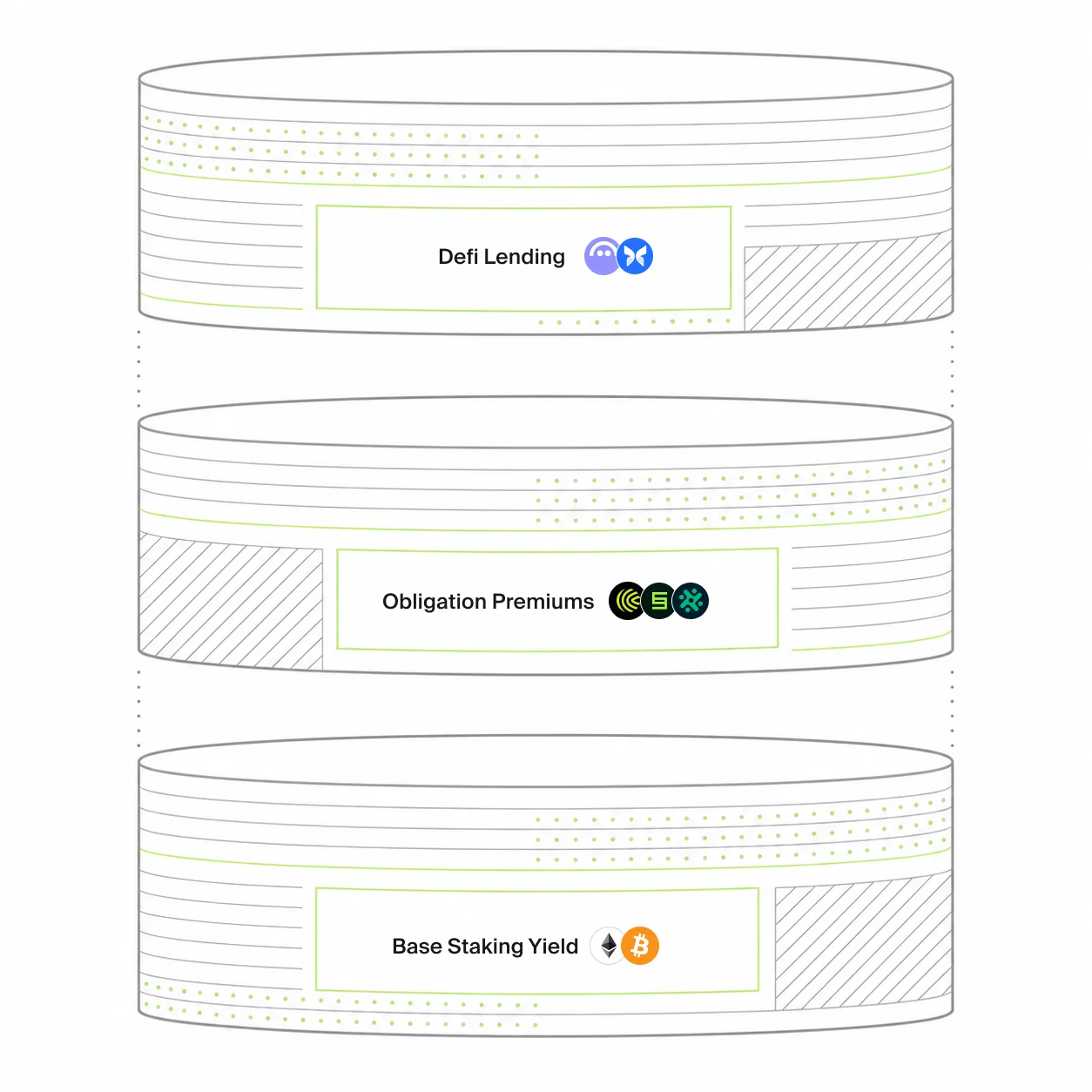
Single deposit, three yield streams
Symbiotic vaults can stack multiple sources of return on the same committed capital. Deposits can earn a base staking yield, receive premiums for backing obligations across multiple applications, and access low-risk lending yield when available.
Capital can be reallocated as conditions change, helping vaults target higher, more sustainable returns without relying on a single source.
Single deposit, three yield streams
Symbiotic vaults can stack multiple sources of return on the same committed capital. Deposits can earn a base staking yield, receive premiums for backing obligations across multiple applications, and access low-risk lending yield when available.
Capital can be reallocated as conditions change, helping vaults target higher, more sustainable returns without relying on a single source.
Single deposit, three yield streams
Symbiotic vaults can stack multiple sources of return on the same committed capital. Deposits can earn a base staking yield, receive premiums for backing obligations across multiple applications, and access low-risk lending yield when available.
Capital can be reallocated as conditions change, helping vaults target higher, more sustainable returns without relying on a single source.
Single deposit, three yield streams
Symbiotic vaults can stack multiple sources of return on the same committed capital. Deposits can earn a base staking yield, receive premiums for backing obligations across multiple applications, and access low-risk lending yield when available.
Capital can be reallocated as conditions change, helping vaults target higher, more sustainable returns without relying on a single source.
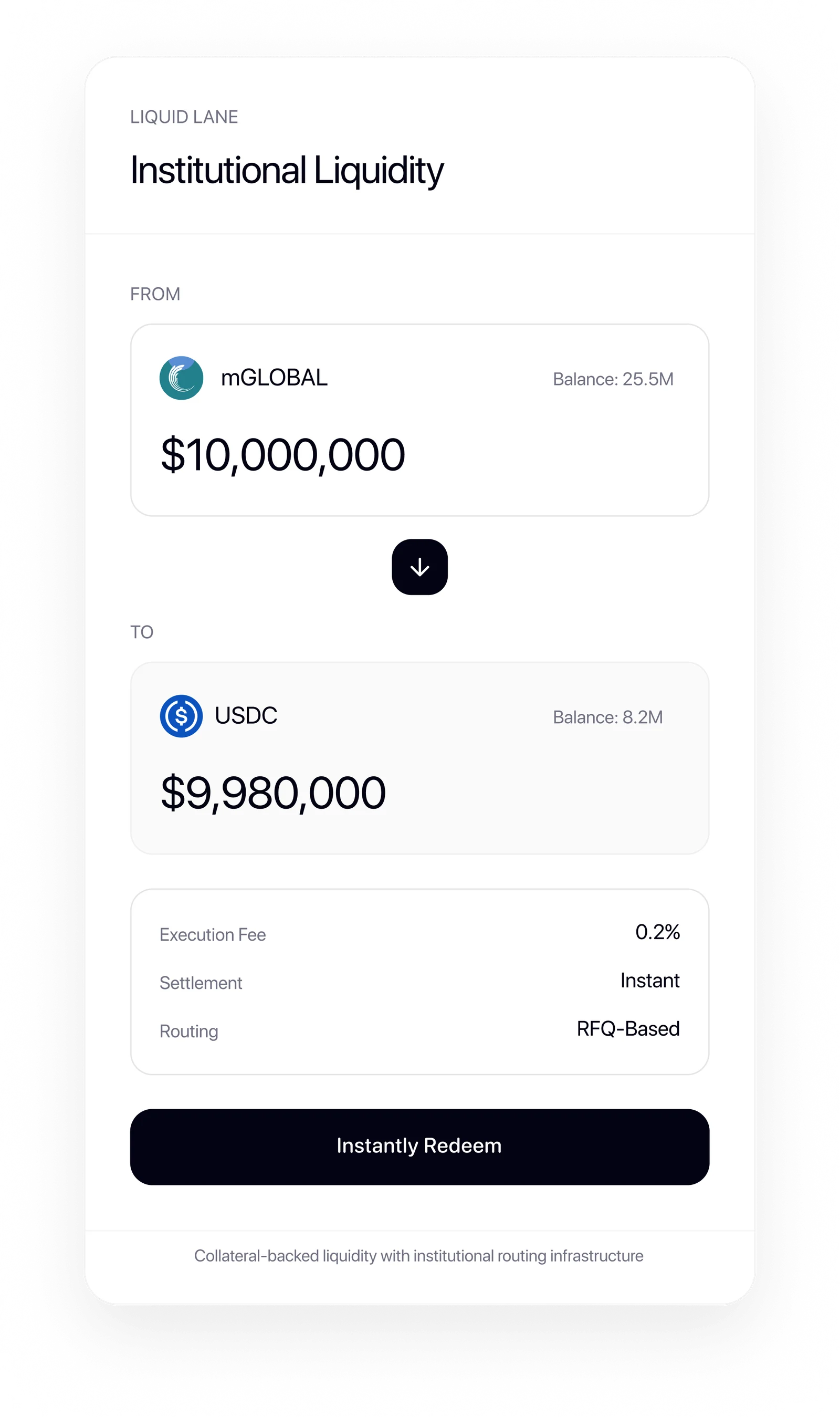
Liquid Lane - Powered by Symbiotic Core
Built on Symbiotic Core, Liquid Lane turns curated vault capital into instant liquidity for tokenized assets.
A single vault can support RFQ-based redemptions and on-demand liquidations across many RWAs, while adapters keep capital productive between settlement events.
Liquid Lane - Powered by Symbiotic Core
Built on Symbiotic Core, Liquid Lane turns curated vault capital into instant liquidity for tokenized assets.
A single vault can support RFQ-based redemptions and on-demand liquidations across many RWAs, while adapters keep capital productive between settlement events.









'%3e%3cpath%20d='M57.7172%2015.1749C57.7172%2017.8854%2056.1293%2019.9975%2053.4126%2019.9975C50.6256%2019.9975%2049.1084%2017.9558%2049.1084%2015.1749C49.1084%2012.3587%2050.7314%2010.317%2053.4126%2010.317C56.1293%2010.317%2057.7172%2012.4643%2057.7172%2015.1749ZM60.4338%2015.1749C60.4338%2011.0914%2058.0345%207.95845%2053.8008%207.95845C52.0368%207.95845%2050.2373%208.73293%2049.3201%2010.2466V8.16971H46.6387V27.7771H49.3201V20.1735C50.1668%2021.652%2051.8956%2022.356%2053.6596%2022.356C58.07%2022.356%2060.4338%2019.1174%2060.4338%2015.1749ZM93.0261%2015.4565L98.0358%2022.1448H101.388L94.9663%2013.6259L100.858%208.16971H97.3656L91.2621%2013.7668V2.32617H88.5455V22.1448H91.2621V17.0758L93.0261%2015.4565ZM73.478%2015.1749C73.478%2017.815%2072.0314%2019.9975%2069.174%2019.9975C66.3865%2019.9975%2064.8695%2017.9558%2064.8695%2015.1749C64.8695%2012.4291%2066.4219%2010.317%2069.174%2010.317C71.7494%2010.317%2073.478%2012.2179%2073.478%2015.1749ZM73.2664%208.16971V10.0354C72.2784%208.73293%2070.5144%207.95845%2068.8561%207.95845C64.7282%207.95845%2062.1528%2010.8802%2062.1528%2015.1749C62.1528%2019.3639%2064.6224%2022.356%2068.8915%2022.356C70.5852%2022.356%2072.5608%2021.652%2073.2664%2020.2439V22.1448H75.9477V8.16971H73.2664ZM83.0063%208.80333C82.4065%209.26095%2081.9479%209.92978%2081.6305%2010.8802V8.16971H78.9488V22.1448H81.6305V15.8437C81.6305%2014.154%2081.9125%2012.8515%2082.4065%2011.9363C82.9355%2010.9858%2083.8177%2010.493%2085.0174%2010.493H87.0634V8.16971H85.3702C84.3821%208.16971%2083.6062%208.38092%2083.0063%208.80333ZM44.3102%2016.8645C44.3102%2012.8515%2041.3113%2011.9363%2037.889%2010.9858C36.0191%2010.5634%2033.2319%2010.0002%2033.2319%207.71204C33.2319%205.81115%2035.243%205.07192%2037.1834%205.07192C39.3708%205.07192%2041.0996%206.30397%2041.3466%208.48652H44.169C43.9926%204.8607%2041.1349%202.53738%2037.2187%202.53738C33.7611%202.53738%2030.3742%204.22707%2030.3036%207.67683C30.3036%2011.5139%2033.2672%2012.5347%2036.6895%2013.4499C38.3124%2013.9076%2041.4524%2014.6468%2041.4524%2016.8997C41.4524%2019.0118%2039.1944%2019.8215%2037.0776%2019.8215C34.4668%2019.8215%2032.7027%2018.2374%2032.5263%2015.6325H29.6333C29.7744%2019.4695%2032.3499%2022.356%2037.0423%2022.356C40.7468%2022.356%2044.3102%2020.8424%2044.3102%2016.8645Z'%20fill='%23101014'/%3e%3cpath%20d='M15.8452%2014.1007H24.8542C25.2008%2014.1007%2025.2706%2013.6299%2024.9555%2013.4861L15.8457%209.34635V0.322351C15.8457%20-0.0144799%2015.3942%20-0.125005%2015.2384%200.173809L11.4933%207.36861L7.34328%205.46682C6.94624%205.30683%206.70241%205.6294%206.83716%205.90661L9.31191%2011H0.302836C-0.0436694%2011%20-0.113502%2011.4708%200.201616%2011.6145L9.31136%2015.7544V24.7784C9.31136%2025.1152%209.76287%2025.2257%209.91867%2024.9269L13.6638%2017.7321L17.8138%2019.6339C18.2108%2019.7938%2018.4547%2019.4713%2018.3199%2019.1941L15.8452%2014.1007Z'%20fill='url(%23paint0_linear_167_6814)'/%3e%3c/g%3e%3cdefs%3e%3clinearGradient%20id='paint0_linear_167_6814'%20x1='20.2763'%20y1='6.65932'%20x2='4.08196'%20y2='19.1085'%20gradientUnits='userSpaceOnUse'%3e%3cstop%20stop-color='%23FA43BD'/%3e%3cstop%20offset='1'%20stop-color='%23FFA930'/%3e%3c/linearGradient%3e%3cclipPath%20id='clip0_167_6814'%3e%3crect%20width='101.16'%20height='27.7774'%20fill='white'/%3e%3c/clipPath%3e%3c/defs%3e%3c/svg%3e)
Liquid Lane - Powered by Symbiotic Core
Built on Symbiotic Core, Liquid Lane turns curated vault capital into instant liquidity for tokenized assets.
A single vault can support RFQ-based redemptions and on-demand liquidations across many RWAs, while adapters keep capital productive between settlement events.
Liquid Lane - Powered by Symbiotic Core
Built on Symbiotic Core, Liquid Lane turns curated vault capital into instant liquidity for tokenized assets.
A single vault can support RFQ-based redemptions and on-demand liquidations across many RWAs, while adapters keep capital productive between settlement events.
Curate Vaults
Bring your capital strategies to market with Symbiotic's configurable vaults.
Build Applications
Tap into shared collateral pools to power financial applications.
Deposit to Collateral Markets
Put capital to work with curated vaults built for diversified, sustainable yield.
Curate Vaults
Bring your capital strategies to market with Symbiotic's configurable vaults.
Build Applications
Tap into shared collateral pools to power financial applications.
Deposit to Collateral Markets
Put capital to work with curated vaults built for diversified, sustainable yield.
Frequently Asked Questions
Symbiotic Core
Core V2 expands Symbiotic’s model from shared security into broader collateral markets, where committed capital can back obligations across applications. Its biggest upgrade is advancing capital efficiency: available collateral can earn through whitelisted adapters, while remaining committed and recallable when obligations need to be met. Core V2 also introduces a standardized integration path, more predictable withdrawal mechanics, conditional instant withdrawals, and native compounding. Together, these improvements make collateral more productive and flexible.
Symbiotic Core can support applications that need committed, enforceable collateral to back economic obligations. This includes credit markets, insurance and coverage protocols, stablecoin and reserve systems, and liquidity for tokenized assets. It can also support shared security use cases, where networks use Symbiotic collateral to secure operators or infrastructure.
Symbiotic is multi-asset at the protocol level, while each individual vault accepts a single ERC-20 collateral asset. This can include ETH-based assets, stablecoins such as USDC, blue-chip crypto assets, including BTC-derived collateral where supported by the vault configuration and relevant integrations.
Standard withdrawals become claimable after the vault’s configured delay from the time the request is made, rather than depending on where the request falls within an epoch. This is typically around 14 days, though curators may set longer delays for vaults with longer redemption cycles, such as tokenized RWAs. Instant withdrawals may also be possible when sufficient liquid, unallocated buffer is available; otherwise, the standard delay applies.
Capital providers are exposed to the risks of applications and obligations they choose to back, including potential slashing if an enforcement event occurs. Adapters can also introduce external protocol and liquidity risk. These risks are managed through whitelisting, curator-set limits, withdrawal buffers, allocation controls, and isolated capital groups. Vault participants should still assess each vault’s strategy, supported applications, and risk parameters before depositing.
Frequently Asked Questions
Symbiotic Core
Core V2 expands Symbiotic’s model from shared security into broader collateral markets, where committed capital can back obligations across applications. Its biggest upgrade is advancing capital efficiency: available collateral can earn through whitelisted adapters, while remaining committed and recallable when obligations need to be met. Core V2 also introduces a standardized integration path, more predictable withdrawal mechanics, conditional instant withdrawals, and native compounding. Together, these improvements make collateral more productive and flexible.
Symbiotic Core can support applications that need committed, enforceable collateral to back economic obligations. This includes credit markets, insurance and coverage protocols, stablecoin and reserve systems, and liquidity for tokenized assets. It can also support shared security use cases, where networks use Symbiotic collateral to secure operators or infrastructure.
Symbiotic is multi-asset at the protocol level, while each individual vault accepts a single ERC-20 collateral asset. This can include ETH-based assets, stablecoins such as USDC, blue-chip crypto assets, including BTC-derived collateral where supported by the vault configuration and relevant integrations.
Standard withdrawals become claimable after the vault’s configured delay from the time the request is made, rather than depending on where the request falls within an epoch. This is typically around 14 days, though curators may set longer delays for vaults with longer redemption cycles, such as tokenized RWAs. Instant withdrawals may also be possible when sufficient liquid, unallocated buffer is available; otherwise, the standard delay applies.
Capital providers are exposed to the risks of applications and obligations they choose to back, including potential slashing if an enforcement event occurs. Adapters can also introduce external protocol and liquidity risk. These risks are managed through whitelisting, curator-set limits, withdrawal buffers, allocation controls, and isolated capital groups. Vault participants should still assess each vault’s strategy, supported applications, and risk parameters before depositing.